Tractor-trailers with no one aboard? The future is near for self-driving trucks on US roads

A self-driving tractor trailer maneuvers around a test track in Pittsburgh, Thursday, March 14, 2024. The truck is owned by Pittsburgh-based Aurora Innovation Inc. Late this year, Aurora plans to start hauling freight on Interstate 45 between the Dallas and Houston areas with 20 driverless trucks. (AP Photo/Gene J. Puskar)

PITTSBURGH (AP) — On a three-lane test track along the Monongahela River, an 18-wheel tractor-trailer rounded a curve. No one was on board.

A quarter-mile ahead, the truck’s sensors spotted a trash can blocking one lane and a tire in another. In less than a second, it signaled, moved into the unobstructed lane and rumbled past the obstacles.

The self-driving semi, outfitted with 25 laser, radar and camera sensors, is owned by Pittsburgh-based Aurora Innovation. Late this year, Aurora plans to start hauling freight on Interstate 45 between the Dallas and Houston areas with 20 driverless trucks.

Within three or four years, Aurora and its competitors expect to put thousands such self-driving trucks on America’s public freeways. The goal is for the trucks, which can run nearly around the clock without any breaks, to speed the flow of goods, accelerating delivery times and perhaps lowering costs. They’ll travel short distances on secondary roads, too.

The companies say the autonomous trucks will save on fuel, too, because they don’t have to stop and will drive at more consistent speeds. Also, Aurora says its testing has shown that if a maintenance issue arises while one of its trucks is traveling on a freeway, the vehicle will automatically pull to the side of the road and remotely call for assistance.

The image of a fully loaded, 80,000-pound driverless truck weaving around cars on a super-highway at 65 mph or more may strike a note of terror. A poll conducted in January by AAA found that a decisive majority of American drivers — 66% — said they would fear riding in an autonomous vehicle.

But in less than nine months, a seven-year science experiment by Aurora will end, and driverless trucks will start carrying loads between terminals for FedEx, Uber Freight, Werner and other partners. Aurora and most of its rivals plan to start running freight routes in Texas, where snow and ice are generally rare.

For years, it seemed as though the initial venture for autonomous vehicles would be ride hailing in large cities. But General Motors’ Cruise robotaxi unit is struggling in the aftermath of a serious crash. And Alphabet’s Waymo faces opposition to expanding its autonomous ride service in California. The result is that self-driving trucks are poised to become the first computer-controlled vehicles deployed in widespread numbers on public roads.

The vehicles have drawn skepticism from safety advocates, who warn that with almost no federal regulation, it will be mainly up to the companies themselves to determine when the semis are safe enough to operate without humans on board. The critics complain that federal agencies, including the National Highway Traffic Safety Administration, take a generally passive approach to safety, typically acting only after crashes occur. And most states provide scant regulation.

But Aurora and other companies that are developing the systems argue that years of testing show that their trucks will actually be safer than human-driven ones. They note that the vehicles’ laser and radar sensors can “see” farther than human eyes can. The trucks never tire, as human drivers do. They never become distracted or impaired by alcohol or drugs.

“We want to be out there with thousands or tens of thousands of trucks on the road,” said Chris Urmson, Aurora’s CEO and formerly head of Google’s autonomous vehicle operations. “And to do that, we have to be safe. It’s the only way that the public will accept it. Frankly, it’s the only way our customers will accept it.”

Phil Koopman, a professor at Carnegie Mellon University who studies vehicle automation safety, said he agreed that self-driving trucks can theoretically be safer than human-driven ones — for the very reason that they lack drivers who might become distracted or impaired. But he cautioned that the vehicles’ computers inevitably will make errors. And just how the trucks will fare in real-world situations, he said, will depend on the quality of their safety engineering.

With billions of dollars in investments at stake, Koopman said, he wonders how the companies will balance safety decisions against cost concerns.

“Everything I see indicates they’re trying to do the right thing,” he said. “But the devil is in the details.”

On the test track, reporters saw Aurora’s semis avoid simulations of road obstacles, including pedestrians, a blown tire, even a horse. But the trucks were running at only 35 mph (56 kilometers per hour) in a controlled environment with nothing unexpected happening. (The trucks are being tested with human safety drivers on Texas freeways at speeds of 65 mph (105 kph) or higher.)

On the track, the trucks spotted obstacles more than a quarter-mile away and acted immediately to avoid them. Urmson said the trucks’ laser sensors can detect people walking on a highway at night, far beyond the distance of headlights.

Since 2021, Aurora trucks have autonomously hauled freight over 1 million miles on public highways — but with human safety drivers in the cabs. There have been only three crashes, Urmson said, all of them caused by mistakes by human drivers in other vehicles.

The crashes turned out to be minor, with no injuries. And in each case, the company said, the Aurora truck was able to safely pull to the side of the road.

A federal database that started in June 2021 shows at least 13 crashes with other vehicles involving autonomous semis, including three involving Aurora. In all the cases, the crashes were caused by other vehicles changing lanes or rear-ending the trucks. Sometimes, human safety drivers took over just before the crash.

Aurora won’t compromise safety, Urmson said, even if ensuring it might delay the timetable for achieving a profit.

“If we put a vehicle on the road that isn’t sufficiently safe — that we aren’t confident in the safety of — then it kills everything else,” he said.

Last month, when Urmson displayed the trucks to Wall Street analysts in Pittsburgh, he said the publicly held company expects to turn a profit by late 2027 or early 2028. To meet that goal, Aurora must succeed in putting thousands of the trucks on the roads, hauling freight from terminal to terminal and collecting a per-mile charge from customers.

The company’s competitors — Plus.ai, Gatik, Kodiak Robotics and others — also plan soon to put driverless trucks on the roads hauling freight for customers. Gatik expects it to happen this year or next; the others haven’t set timetables.

Don Burnette, CEO of Kodiak, said freeways are a better environment for autonomous vehicles than congested cities where ride-hailing robotaxis have been running. There are fewer pedestrians, and fewer unexpected things happen. Still, there are higher speeds and longer braking distances.

In testing on highways with human backup drivers, Burnette said, Kodiak has never experienced a crash in which its trucks were at fault.

“At the end of the day,” Burnette said, “these trucks should be much safer than human drivers.”

Almost every year in the United States, a tractor-trailer plows into traffic that is stopped because of road construction, often causing deaths and injuries. By contrast, Burnette said, autonomous trucks pay attention all the time and are always watching 360 degrees.

Perhaps so. But at a Buc-ee’s mega convenience store and gas station along Interstate 45 about 35 miles south of Dallas, the prospect of driverless semis struck a note of fear.

“It sounds like a disaster waiting to happen,” said Kent Franz, a high school basketball coach in Chandler, Oklahoma, who was traveling to Houston for a wedding. “I’ve heard of the driverless cars — Tesla, what have you — and the accidents they’ve been having. Eighteen-wheelers? Something that heavy, relying on technology that has proven it can be faulty? Doesn’t sound very comfortable to me.”

Patti Pierce, a retired accountant from Plano, Texas, said she would be OK with the technology — in about a decade.

“I don’t want to be on the road with them right now,” she said. “I like the gadgets in my car, but I’m not sure the technology is good enough right now to have a truck that drives itself.”

No federal regulations specifically cover autonomous vehicles, Koopman of Carnegie Mellon noted. Most states have no such regulations, either. Koopman said the automated-vehicle industry has persuaded many states to bar local governments from enacting such regulations. The result, he said, is that the public must trust the companies that are deploying autonomous semis.

The National Highway Traffic Safety Administration and the Federal Motor Carrier Safety Administration, both part of the federal Department of Transportation, lack authority to stop autonomous vehicles from going on the roads. If something goes wrong, though, they can require recalls or order trucks out of service.

“You can’t expect the government to protect you here,” Koopman said. “The company’s going to decide when they think they’re safe, and the only thing the regulator is going to do is judge them after the fact.”

For the past five years, the motor carrier administration has been preparing safety standards for trucks with automated driving systems. The standards will govern inspections, maintenance and the remote monitoring of the trucks. But it’s unclear when the rules will emerge from the regulatory process.

In the meantime, the autonomous semi companies say they can help address a truck driver shortage, estimated by the industry to amount to 64,000 drivers. Yet there also are worries that autonomous trucks eventually will supplant human drivers and cost them their livelihoods.

The Teamsters union, which represents about 600,000 drivers, most of them truckers, is pushing state legislatures to require human drivers to monitor the self-driving systems, contending that they are unsafe. A 2021 Transportation Department study concluded that the nationwide use of fully automated semis was years away, giving drivers time to transition to other transportation and logistics jobs that will be created.

Aurora’s Urmson said he thinks driverless semis will complement the work already done by human drivers, because many more goods will have to be moved for a growing population.

“If you’re driving a truck today,” he said, “my expectation is you’re going to be able to retire driving a truck.”

____

AP Business Writer David Koenig contributed to this report from Dallas and AP Data Journalist Aaron Kessler from Washington.

Deluzio Hosts Social Security Town Hall Conversation in the North Hills

HAMPTON TWP, PA – Yesterday, Congressman Chris Deluzio (PA-17) hosted a Social Security Town Hall with NAMS (Northern Area Multi Service Center) in the North Hills. He was joined by Max Richtman, President and CEO of the National Committee to Preserve Social Security and Medicare (NCPSSM), one of the nation’s most influential senior advocacy and education membership organizations. Several dozen constituents attended the Congressman’s event to hear updates from Washington and to ask questions about Social Security and Medicare.

“The way I see it: Social Security is an obligation this country makes to its hardworking people,” said Rep. Deluzio. “Social Security beneficiaries of today and tomorrow are all of us—our loved ones, family members, neighbors, and friends. More than 170,000 of my constituents receive Social Security, and many rely on these earned benefits to make ends meet. I stand firm in my commitment to protect and strengthen the promise of Social Security.”

“Twenty-one percent of this congressional district is over 65, so it’s critical that Western PA has a congressman who recognizes the value of Social Security and Medicare,” said Max Richtman, President and CEO, National Committee to Preserve Social Security and Medicare. “These programs provide fundamental financial and health security for older constituents living on fixed incomes—and Rep. Deluzio will continue to protect them from cuts. We’re glad that Congressman Deluzio has cosponsored the Social Security 2100 Act, which would boost seniors’ benefits and strengthen the program for decades to come.”

Matzie: Nearly $1.2 million secured for area school

ALIQUIPPA, April 26 – Nearly $1.2 million in new state funding is coming to bolster school security and expand resources for student mental health in the 16th Legislative District, state Rep. Rob Matzie announced today.


Matzie, D-Beaver, said the competitive school safety and security grants awarded by the Pennsylvania Commission on Crime and Delinquency will bolster resources for students and school staff throughout the region.


“Our kids deserve to spend their school days learning, developing confidence and discovering their abilities, and this new funding of nearly $1.2 million will ensure they do so in the safest, most secure environments possible,” Matzie said. “We have worked hard to help keep these grant programs well-funded because we know these dollars are going to support one of our most important priorities – ensuring students and school staff are safe and free to focus on the business of learning and teaching.”


Matzie said the grants – which include both school safety and mental health funding – include:


  • $172,548 to Ambridge Area School District.
  • $168,502 to Central Valley School District.
  • $166,517 to Hopewell Area School District.
  • $151,288 to Freedom Area School District.
  • $150,426 to Aliquippa School District.
  • $139,931 to Rochester Area School District.
  • $74,500 to CLASS Academy.
  • $70,000 to Beaver County Career and Technical Center.
  • $70,000 to Baden Academy Charter School.
  • $3,725 to Beaver Valley Intermediate Unit 27.

State Police arrest pair in death of missing Aliquippa woman

Story by Sandy Giordano – Beaver County Radio. Published April 29, 2024 11:35 P.M.

(Aliquippa, Pa) Shawn Dedominicis,35, and Karissa Brewer,32, of Aliquippa have been arrested by PA State Police in regards to the death of Rikiah Mahrquis Griffie, 23 of Aliquippa. The report was released on Friday, April 26, 2024. The remains were found on April 19, 2024 when Aliquippa Police responded and turned over the investigation to State Police.

Griffie died in the pairs Towne Towers apartment on October 22, 2022.  According to state police they moved and concealed her remains that were found at 100 5th Avenue, which is an abandoned building.
Dedominicis is also charged with theft receiving stolen property and tampering with evidence, and for selling and  disposing of Griffie’s belongings after her death.

Murder suspect in Ambridge shooting apprehended

Story by Sandy Giordano – Beaver County Radio. Published April 29, 2024 11:33 A.M.

(Ambridge, Pa) Nyeheam Kirksey, 18 was arrested in Mckees Rocks, PA Friday afternoon.  Kirksey was the second shooter that law enforcement sought in the murder of Asaun Moreland,15, in Ambridge in July 2023.

District Attorney Nate Bible reported to Beaver County Radio that Kirksey has been charged with first degree murder, and is lodged in the Beaver County Jail without bond.

Dean Frederick

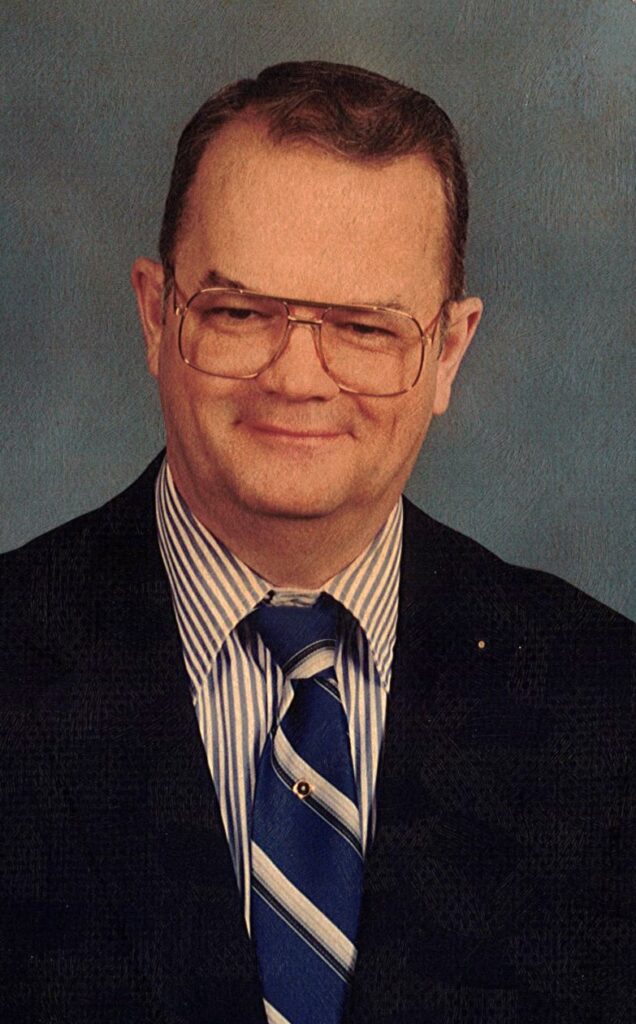
Dean Frederick, 82, of Powhatan, Virginia passed away on April 22, 2024.

He is preceded in death by his parents, Alex and Eleanor Frederick and brother, Alex Frederick, Jr.

Dean is survived by his wife, Juanita Frederick; daughters, Deana Kelly (David), Nicole Delgado (Jorge), and Dawn Monson; sons, Nate Frederick (Erin) and Zac Frederick (Shannon); along with 13 grandchildren.

Interment will be at Sylvania Hills Memorial Park of Rochester on May 4, 2024 at 11:30 a.m. with a reception immediately following at Faith Community Church, 341 Jefferson St., Rochester.

A Celebration of Life Service will be at 11:00 a.m. on May 6, 2024 at Powhatan United Methodist Church, 2253 Rosson Road, with a reception to follow.

In lieu of flowers, memorial contributions may be made to Hope House c/o Powhatan United Methodist Church, PO Box 749, Powhatan, VA 23139 or Powhatan Volunteer Rescue Squad, PO Box 247, Powhatan, VA 23139.

Lorna K. Adcock (1953-2024)

Lorna K. Adcock, 70, of Smock, Pennsylvania passed away unexpectedly on March 20, 2024.
She was born August 21, 1953, in Brookville, Pennsylvania and is the daughter of the late Carl and Mary Adcock. In addition to her parents, Lorna was also preceded in death by her sister Bonnie. Lorna is survived by two sisters and brothers-in-law: Sharon and Scott Neville and Joyce and Donnie Kutzavitch, three nephews: Darrin and Mallori Kutzavitch, Dustin and Emily Kutzavitch, Chad Neville, a niece, Kalyn Neville and a great nephew, Declan Kutzavitch.
She was a former employee of Nemacolin Resort and a current employee of Giant Eagle of Uniontown.
Family and friends are welcome to attend a celebration of life in memory of Lorna on Wednesday, May 1, 2024, from 1-5 p.m. at the Polish Club, 229 S. Mt. Vernon Avenue, Uniontown, Pennsylvania.

Richard David Brown (1946-2024)

Richard David Brown, 77, of Aliquippa (formerly of Brighton Township) passed away on April 25, 2024 at home.

Born on September 16, 1946 in Braddock, Pennsylvania, he was the son of the late Harold D. and Helen M. Brown, who preceded him in death. He is survived by his wife of 56 years, Carolyn L. Brown, four brothers, Donald, Raymond, Duane, and Mark, three daughters, Denise C. Slowinski (Steve), Diane R. Morse (Thomas), Doreen R. Gill (Gary), 9 grandchildren, and 14 great grandchildren.

Prior to his retirement, Rich worked as a dispatcher at USAir and was a veteran of the United States Navy. He was an avid golfer and bowler in addition to being a loving & caring husband, father, brother, and pap.

A Graveside Service will be conducted on Thursday May 2, 2024 at 2 p.m. with Full Military Honors at the National Cemetery of the Alleghenies, 1158 Morgan Road, Bridgeville.
Professional Arrangements have been entrusted to the Noll Funeral Home Inc., 333 Third Street, Beaver. Online condolences may be shared at www.nollfuneral.com.

David Allen Roush (1950-2024)

David Allen Roush, 74, of Beaver, passed away peacefully on April 24, 2024, at H.J. Heinz Veteran Hospital of Pittsburgh.

Born on January 18, 1950, in East Liverpool, Ohio, he was the son of Frank and Betty (Nalley) Corwin.

In addition to his parents, David is survived by his siblings, Cathy (Donald) Krause and Daniel (Ruth) LeFebvre; nephews and niece, Charles Shreve, Aimee Shreve, Bradley Shreve, and Ryan LeFebvre; and several great nieces and nephews.

David was a proud Veteran of the United States Army and had worked for Crucible Steel.  He was Lutheran by faith and was an avid Pittsburgh Sports fan.  In his free time, David was known to be tinkering with model classic cars.

In accordance with his wishes, no services will be held.

Private interment will be in Beaver Cemetery.

The GABAUER-TODD FUNERAL HOME & CREMATION SERVICES (Branch), 340 Third Street, Beaver, is honored to be assisting David’s family during this time.

Joseph Donald Reese III (1969-2024)

Joseph Donald Reese III, 54, of Darlington Township, passed away on April 23, 2024.

Born on April 28, 1969, in Beaver Falls, he was the son of Joseph D. Reese, Jr. and the late Virginia (Kincade) Reese. In addition to his father, he is survived by his daughter, Kaitlin (Traver) Reese Brognano; his wife and highschool sweetheart, Krystal Glass; two brothers, Richard Craig and Christopher Reese, nephews Cody Reese and Richard Craig Jr., nieces Morgan Bertram and Brittnay Mayhue, his best friend, Jeff Schriner, cousins, and other family and friends he loved dearly.

In his spare time he loved to hunt with his friends and daughter, spend time outdoors, create woodworking, work on “Betsy” his Ford Galaxy XL 500 and take it to car shows, ride motorcycles, play with his dogs, and garden.

He would give the shirt off his back for anyone in need, and was always willing to lend a helping hand.

Joe was a carpenter by trade and a member of the local union 420. With every project he completed, he prided himself on quality work and craftsmanship.

Joe prided himself on being a provider and friend to his wife, being an extraordinary father, and a friend to everyone.

Not, how did they die, but how did they live?

Not, what did they gain, but what did they give?

These are the units to measure the worth

Of a person as a person, regardless of birth.

Not, what was their church, nor what was their creed?

But had they befriended those really in need?

Were they ever ready, with a word of good cheer,

To bring back a smile, to banish a tear?

Not, what did the sketch in the newspaper say,

But how many were sorry when they passed away?”

Friends will be received on Saturday, April 27th, 2024 from 2-4 p.m. and 6 p.m. until the time of closing prayers at 8 p.m. in the GABAUER-LUTTON FUNERAL HOME – 117 Blackhawk Road, Chippewa Township.

Services were entrusted to the GABAUER-LUTTON FUNERAL HOME – 117 Blackhawk Road, Beaver Falls.

In lieu of flowers, the family requests that contributions be made in Joseph’s name to the National Wildlife Federation, 11100 Wildlife Center Drive,
Reston, VA 20190.