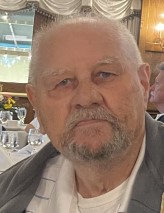
Tina Marie Kamicker (Died July 2, 2024)

Tina Kamicker, 51, of New Brighton died Tuesday, July 2, 2024.

Born February 27, 1973, in Akron, Oh, a daughter of Charlotte (Wagner) Fleming and the late Roger Burchell.  She loved being an aunt, loved her in-laws like siblings, and she had a passion for Rock Music.

She was preceded in death by her father-in-law, Gregory Kamicker

Tina is survived by her wife, Faith Kamicker; three daughters, Destiny (Joel) Stoner, Alisha Whelan, Brittany Whelan (James Kamicker); an aunt, Linda Bauer.  Also surviving her is her favorite uncle Mark Wagner (Jun).

Celebration of Life will be held Saturday, July 13, 2024, at the New Brighton Croatian Club, starting at Noon.

To send flowers to the family or plant a tree in memory of Tina Marie Kamicker, please visit our floral store.

Nanette D. Ott (August 2, 1951 ~ July 2, 2024)

Nanette D. Ott, 72, of North Sewickley, passed away Tuesday, July 2, 2024, after a courageous 24-year battle with cancer.

Born August 2, 1951, in Sewickley, Pa., she is the daughter of the late Richard and Alice (Perris) Winkler.  She was a 1969 graduate of Ambridge High School. She worked in Retail Service where she was an instore demonstrator.   She loved the going to the beach, especially the Outer Banks.  Her role as a loving spouse, nurturing parent, and devoted grandparent defined her life’s purpose. She created a home filled with laughter, love, and endless support, where every moment was a testament to her boundless love for her family. Her wisdom, guidance, and unconditional love will forever resonate in the hearts of those who were blessed to call her family.

Nanette is survived by her husband of 44 years, Larry Ott and his son, Jason Duckworth, three children Mindy Ott (Steve Kotuba), Ellwood City; Kyle (Kristin) Ott, Bridgeport, Conn; Holly Ott, Beaver; grandchildren, Liam Kotuba, Tyler Eugene Ott, and Tristyn Pablo Ott, Andrew Duckworth; brother, Richard (Donna) Winkler; and a nephew, Chris Winkler.

Friends will be received Saturday, July 6, 2024, in the First Presbyterian Church, 1103 8th Ave, Beaver Falls, Pa. from 10 a.m. until time of service at 11 a.m.  Pastor David Oyler, officiating.

Private interment will take place in Sylvania Hills Memorial Park, Daugherty Twp.

To send flowers to the family or plant a tree in memory of Nanette D. Ott, please visit our floral store.

Trump To Come To Pittsburgh

Former President Trump will be in the Pittsburgh area for a rally next weekend.

The Trump campaign announced that a rally will be taking place on Saturday, July 13 at the Butler Farm Show.

Doors are set to open at 1:00 p.m.

The rally will begin at 5:00 p.m.

You can register for tickets to the rally online.

Two tickets can be registered to each phone number and are on a first come, first serve basis.

Biden vows to keep running after his disastrous debate. ‘No one is pushing me out,’ he says

President Joe Biden listens during a visit to the D.C. Emergency Operations Center, Tuesday, July 2, 2024, in Washington. (AP Photo/Evan Vucci)

WASHINGTON (AP) — President Joe Biden defiantly vowed on Wednesday to keep running for reelection, rejecting growing pressure from within his Democratic Party to withdraw after a disastrous debate performance raised questions about his readiness. He said he would not be forced from the race.

“I am running. I am the leader of the Democratic Party. No one is pushing me out,” Biden said, according to a top aide who posted his comment on the X social media platform.

Biden and Harris made a surprise appearance on a Democratic National Committee call, according to three people familiar with the matter who were given anonymity to discuss the private conversation. The people said it was a pep talk, stressing the stakes of the election and returning to Biden’s previous post-debate comments that he would get back up after being knocked down.

It was one of several efforts by the president and his top aides to try to calm increasing anxiety among his allies on Capitol Hill and at top levels of his party.

Democrats are unsatisfied with the explanations of Biden’s debate performance, from both White House staff and Biden himself. And there is a deeper frustration among some Democrats who feel Biden should have handled questions about his stumbling debate performance much sooner and that he has put them in a difficult position by staying in the race.

White House chief of staff Jeff Zients urged people during an earlier all-staff meeting Wednesday to tune out the “noise” and focus on the task of governing.

Even as Zients acknowledged that the days since the Atlanta matchup between Biden and Republican Donald Trump have been challenging, the chief of staff stressed to more than 500 White House aides on the call the accomplishments and the track record of the Democratic administration and said governing will only become more crucial once the campaign season heats up, particularly after the Fourth of July holiday, according to a White House official.

Biden himself began making personal outreach on his own, speaking privately with senior Democratic lawmakers such as Senate Majority Leader Chuck Schumer of New York, House Minority Leader Hakeem Jeffries of New York, Delaware Sen. Chris Coons and South Carolina Rep. James Clyburn, according to a second White House official and others with knowledge of the conversations. Zients also spoke personally with Schumer and Clyburn earlier Wednesday.

On Capitol Hill, there is increasing anxiety with each day as Biden had been slow to reach out to top Democrats and rank-and-file members, according to people familiar with ongoing conversations.

Zients tried to rally the staff’s confidence in Biden’s reelection apparatus, noting that the president has a “strong campaign team” in place and that the White House’s job was to focus on continuing to implement Biden’s agenda. He also told staff that Biden has always made it through tough times, despite being counted out over his decades in public office.

The chief of staff also encouraged aides to “continue being a team” and, while acknowledging the increasing political chatter, to “tune it out” and stay disciplined, according to the official, who was granted anonymity to relay Zients’ private remarks. Zients also urged White House staff to ask questions and offer feedback.

Staff-wide White House calls aren’t unusual, but Wednesdays’ 15-minute check-in came as Biden and senior White House officials were working to assuage rattled lawmakers, donors and other allies within the party amid sharpening questions about whether the 81-year-old president had the competency to run for a second term in office.

A memo sent Wednesday by campaign chair Jen O’Malley Dillon and campaign manager Julie Chavez Rodriguez insists the election between Biden and Trump will still be close, seeking to downplay the lasting effects of the debate.

Biden and Vice President Kamala Harris were also scheduled to hold one of their sporadic lunches on Wednesday, and the president was planning on hosting an assortment of Democratic governors at the White House in the evening.

Among the Democratic governors who were planning to attend in person were Tim Walz of Minnesota, who leads the Democratic Governors Association, J.B. Pritzker of Illinois, Maura Healey of Massachusetts, Daniel McKee of Rhode Island, Gretchen Whitmer of Michigan, Andy Beshear of Kentucky and Gavin Newsom of California, according to their aides. North Carolina Gov. Roy Cooper and New Jersey Gov. Phil Murphy were planning on attending virtually.

GM will pay $146 million in penalties because 5.9 million older vehicles emit excess carbon dioxide

FILE – A General Motors logo is seen on a building, April 24, 2024, in Detroit. GM will pay nearly $146 million in penalties to the federal government because 5.9 million of its older vehicles don’t comply with emissions and fuel economy standards. (AP Photo/Paul Sancya, File)

WASHINGTON (AP) — General Motors will pay nearly $146 million in penalties to the federal government because 5.9 million of its older vehicles do not comply with emissions and fuel economy standards.

The National Highway Traffic Safety Administration said in a statement Wednesday that certain GM vehicles from the 2012 through 2018 model years did not comply with federal fuel economy requirements.

The fine comes after the Environmental Protection Agency said its testing showed the GM pickup trucks and SUVs emit 10% more carbon dioxide on average than GM’s initial compliance testing claimed.

The EPA says the vehicles will remain on the road and cannot be repaired.

GM said in a statement that it complied with all regulations in pollution and mileage certification of its vehicles. The company said it is not admitting to any wrongdoing or that it did not comply with the Clean Air Act.

The enforcement action involves about 4.6 million full-size pickups and SUVs and about 1.3 million midsize SUVs, the EPA said. The affected models include the Chevy Tahoe, Cadillac Escalade and Chevy Silverado. About 40 variations of GM vehicles are covered.

GM will be forced to give up credits used to ensure that manufacturers’ greenhouse gas emissions are below the fleet standard for emissions that applies for that model year, the EPA said.

An EPA spokesman said the violations were unintentional.

But David Cooke, senior vehicles analyst for the Union of Concerned Scientists, questioned how GM could not know that pollution exceeded initial test by more than 10% because the problem was so widespread on so many different vehicles. “You don’t just make a more than 10% rounding error,” he said.

He also was surprised that the government is not making GM take action to correct the excess pollution or reduce the gas mileage estimates on the cars’ window stickers.

Dan Becker, director of the Safe Climate Transport Campaign for the environmental group Center for Biological Diversity, said the violations by GM “show why automakers can’t be trusted to protect our air and health, and why we need strong pollution rules. Supreme Court, take notice!”

The Supreme Court last week rejected a 40-year-old legal doctrine known as Chevron, effectively reducing the power of the EPA and other executive branch agencies and shifting it to the courts. The doctrine has been the basis for upholding thousands of federal regulations but has long been a target of conservatives and business groups, who argue it grants too much power to the executive branch, or what some critics call the administrative state.

In similar pollution cases in the past, automakers have been fined under the Clean Air Act for such violations, and the Justice Department normally gets involved, Cooke said. Hyundai and Kia, for instance, faced Justice Department action in a similar case.

A Justice Department spokesman did not have an immediate comment Wednesday.

___

Krisher reported from Detroit.

To save spotted owls, US officials plan to kill hundreds of thousands of another owl species

To save the imperiled spotted owl from potential extinction, U.S. wildlife officials are embracing a contentious plan to deploy trained shooters into dense West Coast forests to kill almost a half-million barred owls that are crowding out their cousins.

The U.S. Fish and Wildlife Service strategy released Wednesday is meant to prop up declining spotted owl populations in Oregon, Washington state and California. The Associated Press obtained details in advance.

Documents released by the agency show up to about 450,000 barred owls would be shot over three decades after the birds from the eastern U.S. encroached into the West Coast territory of two owls: northern spotted owls and California spotted owls. The smaller spotted owls have been unable to compete with the invaders, which have large broods and need less room to survive than spotted owls.

Past efforts to save spotted owls focused on protecting the forests where they live, sparking bitter fights over logging but also helping slow the birds’ decline. The proliferation of barred owls in recent years is undermining that earlier work, officials said.

“Without actively managing barred owls, northern spotted owls will likely go extinct in all or the majority of their range, despite decades of collaborative conservation efforts,” said Fish and Wildlife Service Oregon state supervisor Kessina Lee.

The notion of killing one bird species to save another has divided wildlife advocates and conservationists. It’s reminiscent of past government efforts to save West Coast salmon by killing sea lions and cormorants that prey on the fish, and to preserve warblers by killing cowbirds that lay eggs in warbler nests.

Some advocates grudgingly accepted the barred owl removal strategy; others said it’s reckless diversion from needed forest preservation.

“The Fish and Wildlife Service is turning from protector of wildlife to persecutor of wildlife,” said Wayne Pacelle, founder of the advocacy group Animal Wellness Action. He predicted the program would fail because the agency won’t be able to keep more barred owls from migrating into areas where others have been killed.

The shootings would likely begin next spring, officials said. Barred owls would be lured using megaphones to broadcast recorded owl calls, then shot with shotguns. Carcasses would be buried on site.

The birds already are being killed by researchers in some spotted owl habitats, with about 4,500 removed since 2009, said Robin Bown, barred owl strategy leader for the Fish and Wildlife Service. Those targeted included barred owls in California’s Sierra Nevada region, where the animals have only recently arrived and officials want to stop populations from taking hold.

In other areas where barred owls are more established, officials aim to reduce their numbers but acknowledge shooting owls is unlikely to eliminate them entirely.

Supporters include the American Bird Conservancy and other conservation groups.

Barred owls don’t belong in the West, said American Bird Conservancy Vice President Steve Holmer. Killing them is unfortunate, he added, but reducing their numbers could allow them to live alongside spotted owls over the long term.

“As the old forests are allowed to regrow, hopefully coexistence is possible and maybe we don’t need to do as much” shooting, Holmer said.

The killings would reduce nationwide barred owl numbers by less than 1%, officials said. That compares with potential extinction for spotted owls should the problem go unaddressed.

Public hunting of barred owls wouldn’t be allowed. The wildlife service would designate government agencies, landowners, American Indian tribes or companies to carry out the killings. Shooters would have to provide documentation of training or experience in owl identification and firearm skills.

The publishing in the coming days of a final environmental study on the proposal will open a 30-day comment period before a final decision is made.

The barred owl plan follows decades of conflict between conservationists and timber companies, which cut down vast areas of older forests where spotted owls reside.

Early efforts to save the birds culminated in logging bans in the 1990s that roiled the timber industry and its political supporters in Congress.

Yet spotted owl populations continued declining after barred owls started showing up on the West Coast several decades ago. Across study sites in the region, at least half of spotted owls have been lost, with losses topping 75% in some areas, said Katherine Fitzgerald, who leads the wildlife service’s northern spotted owl recovery program.

Opponents say the mass killing of barred owls would cause severe disruption to forest ecosystems and could lead to other species — including spotted owls — being mistakenly shot. They’ve also challenged the notion that barred owls don’t belong on the West Coast, characterizing their expanding range as a natural ecological phenomenon.

Researchers say barred owls moved westward by one of two routes: across the Great Plains, where trees planted by settlers gave them a foothold in new areas; or via Canada’s boreal forests, which have become more hospitable as temperatures rise because of climate change.

Northern spotted owls are federally protected as a threatened species. Federal officials determined in 2020 that their continued decline merited an upgrade to the more critical designation of “endangered.” But the Fish and Wildlife Service refused to do so at the time, saying other species took priority.

California spotted owls were proposed for federal protections last year. A decision is pending.

Under former President Donald Trump, government officials stripped habitat protections for spotted owls at the behest of the timber industry. Those were reinstated under President Joe Biden after the Interior Department said political appointees under Trump relied on faulty science to justify their weakening of protections.

FDA approves a second Alzheimer’s drug that can modestly slow disease

This image provided by Eli Lilly shows the company’s new Alzheimer’s drug Kisunla. The Food and Drug Administration approved Eli Lilly’s Kisunla on Tuesday, July 2, 2024 for mild or early cases of dementia caused by Alzheimer’s. (Eli Lilly and Company via AP)

WASHINGTON (AP) — U.S. officials have approved another Alzheimer’s drug that can modestly slow the disease, providing a new option for patients in the early stages of the incurable, memory-destroying ailment.

The Food and Drug Administration approved Eli Lilly’s Kisunla on Tuesday for mild or early cases of dementia caused by Alzheimer’s. It’s only the second drug that’s been convincingly shown to delay cognitive decline in patients, following last year’s approval of a similar drug from Japanese drugmaker Eisai.

The delay seen with both drugs amounts to a matter of months — about seven months, in the case of Lilly’s drug. Patients and their families will have to weigh that benefit against the downsides, including regular IV infusions and potentially dangerous side effects like brain swelling.

Physicians who treat Alzheimer’s say the approval is an important step after decades of failed experimental treatments.

“I’m thrilled to have different options to help my patients,” said Dr. Suzanne Schindler, a neurologist at Washington University in St. Louis. “It’s been difficult as a dementia specialist — I diagnose my patients with Alzheimer’s and then every year I see them get worse and they progress until they die.”

Both Kisunla and the Japanese drug, Leqembi, are laboratory-made antibodies, administered by IV, that target one contributor to Alzheimer’s — sticky amyloid plaque buildup in the brain. Questions remain about which patients should get the drugs and how long they might benefit.

The new drug’s approval was expected after an outside panel of FDA advisors unanimously voted in favor of its benefits at a public meeting last month. That endorsement came despite several questions from FDA reviewers about how Lilly studied the drug, including allowing patients to discontinue treatment after their plaque reached very low levels.

Costs will vary by patient, based on how long they take the drug, Lilly said. The company also said a year’s worth of therapy would cost $32,000 — higher than the $26,500 price of a year’s worth of Leqembi.

The FDA’s prescribing information tells doctors they can consider stopping the drug after confirming via brain scans that patients have minimal plaque.

More than 6 million Americans have Alzheimer’s. Only those with early or mild disease will be eligible for the new drug, and an even smaller subset are likely to undergo the multi-step process needed to get a prescription.

The FDA approved Kisunla, known chemically as donanemab, based on results from an 18-month study in which patients given getting the treatment declined about 22% more slowly in terms of memory and cognitive ability than those who received a dummy infusion.

The main safety issue was brain swelling and bleeding, a problem common to all plaque-targeting drugs. The rates reported in Lilly’s study — including 20% of patients with microbleeds — were slightly higher than those reported with competitor Leqembi. However, the two drugs were tested in slightly different types of patients, which experts say makes it difficult to compare the drugs’ safety.

Kisunla is infused once a month compared to Leqembi’s twice-a-month regimen, which could make things easier for caregivers who bring their loved ones to a hospital or clinic for treatment.

“Certainly getting an infusion once a month is more appealing than getting it every two weeks,” Schindler said.

Lilly’s drug has another potential advantage: Patients can stop taking it if they respond well.

In the company’s study, patients were taken off Kisunla once their brain plaque reached nearly undetectable levels. Almost half of patients reached that point within a year. Discontinuing the drug could reduce the costs and safety risks of long-term use. It’s not yet clear how soon patients might need to resume infusions.

Logistical hurdles, spotty insurance coverage and financial concerns have all slowed the rollout of competitor Leqembi, which Eisai co-markets with U.S. partner Biogen. Many smaller hospitals and health systems aren’t yet setup to prescribe the new plaque-targeting Alzheimer’s drugs.

First, doctors need to confirm that patients with dementia have the brain plaque targeted by the new drugs. Then they need to find a drug infusion center where patients can receive therapy. Meanwhile, nurses and other staff must be trained to perform repeated scans to check for brain swelling or bleeding.

“Those are all things a physician has to have set up,” said Dr. Mark Mintun, who heads Lilly’s neuroscience division. “Until they get used to them, a patient who comes into their office will not be offered this therapy.”

Ann Wilson announces cancer diagnosis, postpones Heart tour

LOS ANGELES (AP) — Ann Wilson, lead singer of rock band Heart, says she has cancer and the band is postponing the remaining shows on its Royal Flush Tour while she undergoes treatment.

Wilson said in a statement Tuesday that she underwent a surgery to remove a cancerous growth and is recovering steadily, but that her doctors urged her to undergo preventive chemotherapy and take time off from performing “in order to fully recover.” That meant the rest of the shows on the North American tour will be postponed to dates in 2025.

“To the ticket buyers, I really do wish we could do these gigs. Please know that I absolutely plan to be back on stage in 2025,” Wilson said in the statement. “My team is getting those details sorted & we’ll let you know the plan as soon as we can.”

All previously purchased tickets for the now-postponed shows will be honored. The rescheduled dates will be announced in the coming weeks, according to the release.

“This is merely a pause. I’ve much more to sing,” Wilson continued in the statement before adding, “Respectfully, this is the last public statement l’d like to make on the matter.”

Over 50 shows at stadium and arena venues in dozens of cities across the U.S. and Canada are impacted by the postponement. Select shows were set to include performances from Def Leppard and Journey, and Heart has not announced whether those bands will accompany them at the rescheduled performances.

The band, led by Wilson and her sister Nancy Wilson on the guitar, canceled the European leg of their tour in May, citing that the singer had to have “a time-sensitive but routine procedure for which the minimum recovery time is six weeks.”

Wilson posted on Instagram at the time of the European shows’ cancellation, writing, “I’m okay! Please don’t worry. I do apologize for any inconvenience this may cause. It’s certainly an inconvenience for me.”

The Wilson sisters, who made hits like “Magic Man,” “Crazy on You” and “Alone,” have made music together since the ’70s. The Rock & Roll Hall of Famers were honored with a lifetime achievement award from the Recording Academy in 2023.

Pennsylvania Sen. Bob Casey stands by Biden, says voters will decide on issues, not on a bad debate

Sen. Bob Casey, D-Pa., speaks to reporters after a campaign event, Monday, July 1, 2024, in Scranton, Pa. (AP Photo/Matt Slocum)

SCRANTON, Pa. (AP) — Pennsylvania Sen. Bob Casey said Monday that President Joe Biden is able to run a strong race and serve a second term in the Oval Office, standing by his close ally in the critical battleground state following a disastrous debate performance that’s prompting some national Democrats to question his candidacy.

Casey had stayed quiet about Biden’s performance before making his first public appearances since Thursday night’s debate, including a campaign stop in Scranton, Pennsylvania, the blue-collar hometown that he shares with Biden and that the president name-checked in the debate.

Casey, who is also seeking reelection in November, acknowledged that Biden had a bad debate, but also suggested that voters have bigger concerns.

“He had a bad night and debate, but I think people know what’s at stake,” Casey told reporters, arguing that voters are more concerned about issues like abortion, labor and voting rights and the fate of democracy.

“I’ve been at this a while, and I know his work,” Casey said. “And I also know that the American people and the people of Pennsylvania are going to focus on these races in the way that I just outlined.”

Casey would not elaborate on why he thinks Biden is fit and said he doesn’t worry that Biden’s debate performance would affect his own race for Senate.

They lead the ticket together in a battleground state that is critical to the Democrats’ fortunes in holding the White House and Senate. No Democrat has won the White House without Pennsylvania’s support since Harry S. Truman in 1948.

Casey’s opponent, former hedge fund executive David McCormick — like other down-ballot Republicans — has seized on Biden’s performance, accusing Casey of lying about Biden’s fitness to be president and suggesting that Biden’s Cabinet should consider forcing him out of office, using the 25th Amendment.

The president’s debate performance last week left many donors, party strategists and rank-and-file DNC members publicly and privately saying they want the 81-year-old Biden to step aside to allow the party to select a younger replacement at the Democratic National Convention in August.

Biden spent the weekend trying to stabilize his campaign, then gathering with family as previously planned at Camp David, where they discussed the path forward.

The president and his team characterized his debate performance as an outlier, arguing one bad night shouldn’t define him or jeopardize the election.

Biden told a Saturday fundraiser on Long Island that he didn’t have a “great night” at the debate, but that former President Donald Trump’s falsehoods and reminders about the January 6, 2021, insurrection had resonated more with undecided voters.

McCormick, for his part, hasn’t commented on a blatant falsehood Trump told during the debate about the Jan. 6 attack on the Capitol by his supporters. Trump falsely claimed the attackers were “a relatively small number of people that went to the Capitol and in many cases were ushered in by the police.”

Lawsuit says Pennsylvania county deliberately hid decisions to invalidate some mail-in ballots

HARRISBURG, Pa. (AP) — A western Pennsylvania county’s elected commissioners were sued Monday over a policy adopted for this year’s primary in which people whose mail-in ballots were disqualified for technical violations say they were purposely not informed in time to fix errors.

Seven disqualified primary voters, the local NAACP branch and the Center for Coalfield Justice sued Washington County’s election board over what they called “systematic and deliberate efforts” to conceal the policy by directing elections office staff not to tell voters who called that they had made errors that prevented their votes from being counted.

The lawsuit filed in county common pleas court said the policy resulted in 259 voters being disenfranchised and many of those voters still do not realize it. The seven voters who are suing, ages 45 to 85, all had their mail-in ballots invalidated because of incomplete or missing dates, the lawsuit stated. One also failed to sign the exterior envelope and another signed in the wrong place.

“Because of the board’s actions, voters had no way of learning that their ballot would not be counted, and were deprived of the opportunity to protect their right to vote by taking advantage of an existing statutory process: voting by provisional ballot,” the lawsuit claimed.

The lawsuit seeks to have Washington County’s current policy declared unconstitutional as a violation of due process rights and to prevent the elections board from concealing information from voters and misleading them. It was filed by lawyers with the American Civil Liberties Union of Pennsylvania, Public Interest Law Center and the Philadelphia-based law firm Dechert.

Washington County had notified voters their ballots were filled out incorrectly and gave those voters a chance to fix them until this year’s April 23 primary. For this year’s primary, the Washington commissioners voted 2-1 to not allow voters to cure improper ballots and had staff mark them in the statewide elections software as “received,” a status that does not tell voters their ballots won’t be counted. The two Republican commissioners were in favor, the Democrat opposed.

The lawsuit says no other county in Pennsylvania “actively conceals the insufficiency of a voter’s mail-in ballot submission, especially when a voter calls their county elections’ office to inquire whether their mail-in ballot meets the requirements and will be counted.”

Messages seeking comment were left Monday for Washington Board of Commissioners Chairman Nick Sherman, a Republican, and for the county’s lawyer, Gary Sweat. An ACLU lawyer said attempts to engage the commissioners on the issue drew no response.

Retired occupational therapist Bruce Jacobs, 65, one of the plaintiffs, said in a video news conference that the primary was long over by the time he learned his vote had been invalidated because he failed to sign and date the return envelope. He said he felt deceived and his rights were denied.

“County officials have eroded people’s rights to the dignity of our elections,” Jacobs said. “And I believe that this must change.”

Pennsylvania made access to mail-in ballots universal, a Democratic priority, under a 2019 law that also eliminated straight-party ticket voting, a Republican goal. The pandemic followed a few months later, fueling participation in mail-in voting. In the subsequent elections, Pennsylvania Democrats have been far more likely than Republicans to vote by mail.

The process has drawn a series of lawsuits, most notably over whether errors in filling out the exterior of the return envelope can invalidate the ballot. Earlier this year, the 3rd U.S. Circuit Court of Appeals upheld a mandate that the envelopes contain accurate, handwritten dates.

During the April primary, redesigned exterior envelopes reduced the rate of rejected ballots, according to state elections officials.

Older voters are disproportionately more likely to send in ballot envelopes with incorrect or missing dates, advocates have said.