(Credit for Photo: Photo Provided with Release Courtesy of the National Aviary in Pittsburgh, Caption for Photo: Harper swimming in the Wetlands)
Noah Haswell, Beaver County Radio News
(Pittsburgh, PA) The National Aviary in Pittsburgh is beginning their 2026 Fall Annual Campaign: From Rescue to Recovery.
Dr. Marshall Sklar, who is a generous friend of that aviary and a member of its Donor Society, will only match the first $10,000 raised.
Support for recovery of a young Brown Pelican named Harper and other birds is the main reason that this campaign exists.
Harper became tangled in discarded fishing lines along a shoreline in Florida as a juvenile.
Harper was severely injured and was transported to the nearby Seaside Seabird Sanctuary, which is where a team worked hard on the pelican’s recovery.
Harper is now thriving in the Wetlands habitat of the National Aviary in Pittsburgh along with a long-time resident, Brown Pelican Ralph.
The match from Dr. Sklar goes straight to the National Aviary of Pittsburgh’s veterinary care program, which is the team that keeps Harper and every other bird that is there healthy.
Every gift to that aviary’s Fall Annual Campaign supports its Avian Conservation Fund.
If you give $50, it becomes $100 because of Dr. Sklar’s match.
“Critical Hours” is a radio show and podcast that discusses the ideas, movements, and moments reshaping our world, our communities, and our lives. Produced by the Catanzarite Studio LLC, with hosts Lauren Leonard and Stephen Catanzarite. Listen live Saturday mornings at 7.
From Dawn at Shippingport to Midnight at Chernobyl: A Critical Hours special presentation
Stephen Catanzarite and Lauren Leonard trace the line from the construction and operation of the Shippingport Atomic Power Station to the nuclear disaster at Chernobyl.
In 1957, a reactor went critical at Shippingport, Pennsylvania, launching the first full-scale commercial nuclear power plant in the United States. Twenty-nine years later, a reactor at Chernobyl in the Soviet Union exploded.
This episode features Stephen Catanzarite’s talk at the Beaver Area Historical Museum last April, tracing the arc between these two events. It begins with President Dwight Eisenhower’s “Atoms for Peace” speech and the building of Shippingport Atomic Power Station, then follows the Soviet program, the design flaw that was known and suppressed, and the disaster that changed the course
of history.
(Credit for Headline Photo and Photos Below: Photos Provided with Release Courtesy of McDonald’s)
Noah Haswell, Beaver County Radio News
(Beaver County, PA) Participating McDonald’s restaurants are offering a Quarter Pounder with Cheese Meal, with a drink and a medium size French fries for $8 for a limited time beginning on Monday, November 2nd.
The McDonald’s Quarter Pounder with Cheese features a ¼ lb. of 100% fresh beef, which is cooked to order and it is topped with slivered onions, pickles that are tangy and two slices of American cheese that are melty on a sesame seed bun.
It is paired with the world famous McDonald’s French fries and a drink that is refreshing.
This meal is pictured below:
McDonald’s is also introducing a new lineup of limited-time seasonal drinks starting on Tuesday, November 3rd at participating McDonald’s restaurants nationwide.
According to a release from McDonald’s, this lineup of seasonal drinks includes:
Frosted Cranberry Splash with Sprite®: a crisp Sprite infused with bright orange and cranberry flavors, featuring cold foam and cranberry sprinkles for a refreshing finish.
Red Bull® Frosted Cranberry Energizer: the bold, uplifting flavor of Frosted Cranberry with cold foam and sprinkles meets the energizing boost of Red Bull® – made for packed holiday schedules and festive adventures. Available with classic Red Bull and Red Bull Zero®.
Cookie Butter Frappé, Latte and Iced Coffee: a creamy blend of rich cookie butter flavor topped with caramel cookie crumbs and sweet vanilla whip for a seasonal treat.
(Pittsburgh, PA) Pennsylvania State Police at the Rivers Casino in Pittsburgh reported today that a suspect stole an Apple iPhone from a twenty-six-year-old woman from Zelienople at that casino on Sunday.
This occurred at 3:23 a.m. and the victim forgot that iPhone when she left a slot machine.
Video surveillance shows the suspect picking the phone up and walking away.
According to police, the suspect was contacted and returned the phone, and the victim stated that she did not want to press charges.
(Washington, D.C.) Congressman Chris Deluzio (PA-17), Congresswoman Pramila Jayapal (WA-07), Congresswoman Debbie Dingell (MI-12), and Congressman Pat Ryan (NY-18) introduced the Improving Medicare Coverage Act last week.
This is legislation that would lower the Medicare eligibility age from 65 to 50 and make major coverage improvements.
It is estimated that lowering the Medicare age could reduce costs for employers by up to 43 percent in addition to lowering costs for adults that are older and improving the outcomes for patients.
According to a release from Congressman Chris Deluzio’s office, the Improving Medicare Coverage Act would specifically do these things:
Lower the Medicare eligibility age to 50;
Establish a Medicare Cost Assistance Program to replace the Qualified Medicare Beneficiary (QMB), Specified Low-Income Medicare Beneficiary (SLMB), and the Qualifying Individual (QI) programs with one program covering specified Part A premiums and Part B premiums, deductibles, and coinsurance for individuals with incomes up to 200% of the federal poverty level (FPL).
Enhance prescription drug affordability by:
Expanding access to assistance with out-of-pocket costs under Medicare Part D for low-income seniors and individuals with disabilities;
Combining the existing Extra Help and Low-Income Subsidy programs into one program;
Raising the eligibility from 135% FPL to 200% FPL;
Removing the asset test;
Ensuring that any individual making under 400% FPL who is not eligible for the Medicare Savings Program maintains the same eligibility for marketplace premium tax credits.
“Critical Hours” is a radio show and podcast that discusses the ideas, movements, and moments reshaping our world, our communities, and our lives. Produced by the Catanzarite Studio LLC, with hosts Lauren Leonard and Stephen Catanzarite. Listen live Saturday mornings at 7.
The Lost Virtue of Prudence with guest Fr. John Naugle
Father John Naugle joins “Critical Hours” to discuss why prudence, the virtue of practical wisdom, has gone missing, and what it would take to recover it.
We tend to think of prudence as caution, playing it safe. In the classical tradition, prudence is something richer: practical wisdom, the ability to see what a particular situation requires and to act rightly within it.
That’s why St. Thomas Aquinas called prudence the “charioteer of the virtues.” Hosts Lauren Leonard and Stephen Catanzarite talk with Naugle, a priest of the Diocese of Pittsburgh and parochial vicar of St. Augustine Parish in Beaver Falls, about why prudence has gone missing from public life.
They discuss how institutions make decisions under uncertainty, what it would mean to recover the virtue of prudence as artificial intelligence reshapes the world, and how to cultivate it in our own lives.
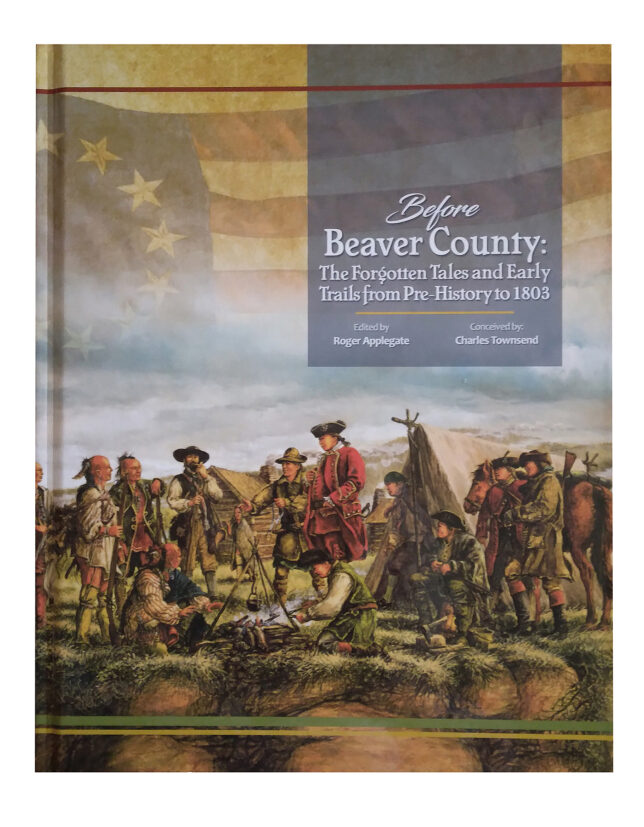
“Before Beaver County: The Forgotten Tales and Early Trails from Pre-History to 1803,” shines a light on the earliest days of Beaver County.
This extensive new book — a resource for students, teachers, researchers, history lovers and curiosity seekers — captures the stories and mysteries of the people who lived on our rivers, hills and valleys from pre-history to 1803.
To mark America250, the Beaver County Historical Research & Landmarks Foundation rallied volunteers to research, write, make maps and illustrations and publish “Before Beaver County.”
Readers will uncover the riddle of early Native peoples and their seeming disappearance. They will learn why fortune-seekers and risk-takers came to this promising frontier — considered to be worth dying for by French, English, Colonial and Native forces.
Additional chapters reveal intriguing details about:
● The heart of a massive lake that covered three states and why our rivers reversed the direction of their flow
● Mysterious Native rock carvings, a Gilded Age tourist attraction near Smith’s Ferry
● Native American artifacts dating from 7,000 B.C
● The tribal village of Logs Town, a major trading and diplomatic center
● George Washington’s travels here, leading to the French and Indian War
● The first military training grounds for American troops
● The home of a Revolutionary War fort
● A well-traveled road originally built to transport military supplies.
A Missing Chapter In Written History
Beaver County was formed by the Pennsylvania Legislature in 1800, but became officially independent from Allegheny County in 1803 — the same year that Meriweather Lewis was stalled on the Ohio River during the first leg of the nation’s Discovery Corps exploration.
Notably, in 1904, Joseph H. Bausman published the detailed two-volume “The History of Beaver County, Pennsylvania: And Its Centennial Celebration.” In 1989, “The Twentieth Century History of Beaver County, Pennsylvania, 1900-1988,” edited by Cheryl Weller Beck, was released, covering the area’s industrial era, social shifts and modern developments.
This latest book about Beaver County looks at the earliest ages, when the Beaver and Ohio rivers carved routes for travelers, tribes and settlers, filling in a critical missing chapter of Beaver County history.
Now Available — Quantities Limited
“Before Beaver County” is a 250-page, hardcover book sold at the Beaver County Historical Research and Landmarks Foundation (BCHRLF), Vicary Mansion, 1235 Third Ave. Freedom.
The cost is $39.95, plus tax. $10 more for shipping.
For details and an order
form call 724-775-1848 or email bchrlf@bchrlf.org, or visit bchrlf.org.
In addition, just in time for holiday gifting, a book signing event will be hosted at the Vicary Mansion on Nov. 7, 1 to 3 p.m., with a chance to chat with the authors, illustrators and designers.
This effort was supported by Beaver County250 and the Beaver County Recreation and Tourism Department as part of America250.
Reference copies will be available at local libraries and historical societies.
The Story Behind the History
Charles Townsend, one of Beaver County’s foremost historians, initiated this project as a worthy way to mark the nation’s sesquicentennial. He turned to Brenda Applegate, executive director of the BCHRLF, and Roger Applegate, who served as editor for the book. They gathered volunteers to coordinate research, writing, map making and design.
“Our authors and designers were working separately, often about overlapping topics and time periods,” says Roger. “It was important, as we pulled it all together, to be historically accurate, consistent, and, above all, interesting to all possible readers.”
“Before Beaver County: The Forgotten Tales and Early Trails from Pre-History to 1803,” shines a light on the earliest days of Beaver County.
Those interested in purchasing multiple books should consider becoming a member of BCHRLF (starting at $20) for a 10% savings on any purchases or classes. Members receive the quarterly “Milestones” newsletter while supporting BCHRLF.
(Moon Township, PA) Robert Morris University basketball recently launched a unique partnership with TikTok content creator Cullen Honohan of All Hail Ball to elevate the visibility of the Colonials program and make it one of the most talked-about teams that are in college sports.
The Colonials are a mid-major program and they are trying to return to the top of the Horizon League and earn a spot in the 2027 NCAA Division I college basketball tournament.
Honohan’s logo will appear on the jerseys of the Colonials this season.
Honohan has over 1 million followers on TikTok, and he confirms that the partnership is already yielding results because RMU’s Instagram page is doubling its followers in just a few months.
According to RMU head basketball coach Andy Toole, this collaboration is part of an effort to stand out in the competitive landscape of name, image and likeness, as well as the transfer portal.
The 2026 season opener for the Colonials is set for Monday, November 2nd on the road against the University of Nevada in Reno, Nevada.
(Ambridge, PA) A man from York, Pennsylvania is being held in the Beaver County Jail without bond after police say that he took a pump out of the tank of a woman’s car as she was getting gas and sprayed her and another woman with gasoline.
Police arrested Shamar Lewallen on Saturday at the Ambridge Express Marathon station on Merchant Street at around 7 p.m. for reports of a man and woman that were fighting.
Officers arrived and said they had two women and a man at gunpoint, and one of the women had a gun.
Police state that a woman fired a “warning shot” inside the store after Lewallen chased her back inside and was pushing and grabbing her.
Police noted that the two women had entered the station to pay for fuel and observed that Lewallen “wasn’t acting right” and was crying before the attack.
The women told investigators that Lewallen said he wanted to kill someone.
After the women walked outside to pump gas, police confirm that Lewallen left the store and confronted the women.
He then removed the fuel nozzle from the vehicle of the women and sprayed both women with gasoline.
The two women ran back into the building, and police affirmed that Lewallen chased them and was grabbing and pushing one of them.
Police found out that one of the women grabbed a windshield squeegee and hit him to try to get him to stop.
The woman who was being chased pulled out a gun and fired a warning shot into the ground, which sent the bullet ricocheting into the bottom of a display shelf.
Lewallen is being held in the Beaver County Jail without bond and police advise that he is a threat to the public.
(Beaver Falls, PA) State Representative Roman Kozak is hosting a Veterans Appreciation Breakfast on Tuesday, November 10th at the Hangar of the Air Heritage Aviation Museum.
Kozak is inviting veterans of the 14th Legislative District to thank them for their service with a warm meal and conversation ahead of the Veterans Day holiday.
Those that would like to attend must register by Friday, October 30th and you can RSVP for this event by calling 724-847-1352 or by visiting RepKozak.com/Events.