
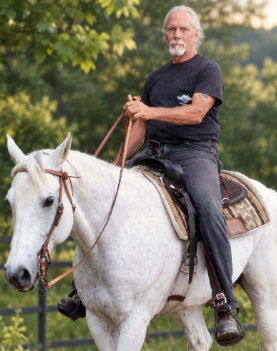
Steven Robert Guthrie, 67, of Darlington Township, passed away peacefully on October 25th, 2026 at AHN Beaver surrounded by his loving family.
He was born in Ellwood City on July 15th, 1959, a son of the late Robert L. and Katherine (Fox) Guthrie.
In addition to his parents, he was preceded in death by a brother, Rudy Guthrie, his nieces, Heaven Myers and Shawna Miller and his nephews, Terry Foley and Dustin Dubbert.
Throughout his life, Steve was a hardworking man of many talents and truly a jack of all trades. He worked at Treharne’s Training Center in Negley, Ohio, where he shared his passion for horses as a skilled horse handler and equestrian specialist. He also proudly served his community as a firefighter in Koppel, where he served as chief for many years demonstrating his willingness to help others in their times of need.
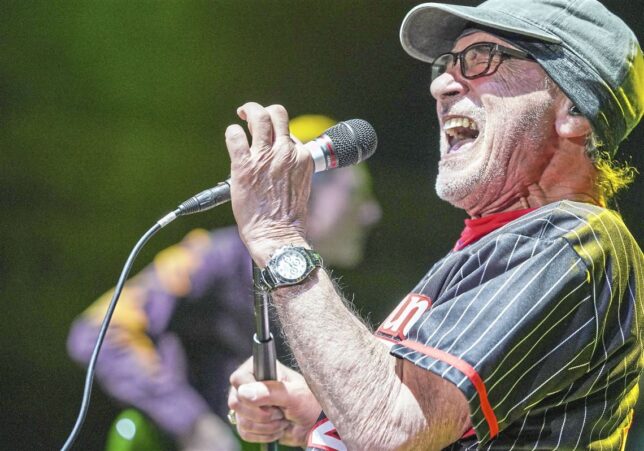
As the owner of Shields Personal Care Home, he dedicated himself to caring for others and treating their loved ones like family. Above all, he absolutely adored his own family, who meant the world to him. He loved to sing and was known for his wonderful sense of humor, always bringing laughter and smiles to those around him. He was truly one of a kind, a remarkable man with a caring heart whose kindness, laughter, and love will be deeply missed by all who had the pleasure of knowing him.
He is survived by his beloved wife of over 10 years, Jennifer Hutchinson, his children: Michael Guthrie, Crystal (Christian) Mahoney, Stacy (Alan) Guthrie, Stephanie (Michael) Guthrie, Robert “Bobby” (Marlyn) Guthrie, Mark (Maria) Hutchinson and Ashley (Kyle) Harvey; as well as his sixteen beloved grandchildren with one on the way, two great-grandchildren, his siblings: Linda (Patrick) Foley, Cheryl (Jack) Sensanbaugher, his twin Robin (Dave) Dubbert, Lona (Jer) Myers, Amber Giambrone, Eric (Terry) Guthrie, Tamera Guthrie, Bobby Guthrie and Irene Guthrie; along with a gaggle of nieces and nephews.
Friends will be received on Thursday, October 29th from 2-4 P.M. and 6 P.M. until the time of the blessing service at 8 P.M. in the GABAUER-LUTTON FUNERAL HOME & CREMATION SERVICES, Inc., 117 Blackhawk Road, Beaver Falls, who was in charge of his arrangements.