

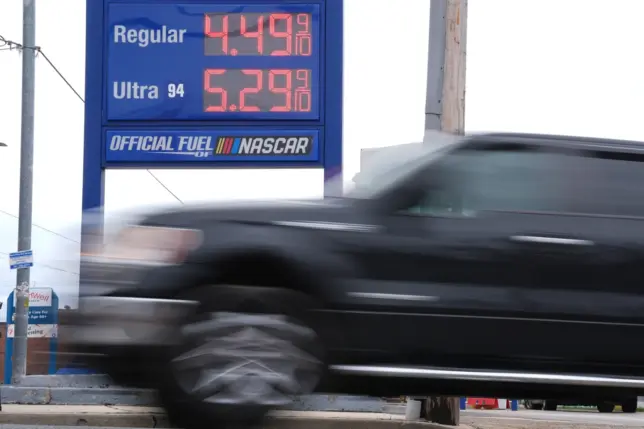
(File Photo: Source for Photo: A vehicle passes a gasoline price board at a filling station in Philadelphia, Friday, March 27th, 2026. (AP Photo/Matt Rourke)
NEW YORK (AP) — U.S. gas prices jumped past an average of $4 a gallon for the first time since 2022 on Tuesday as the Iran war pushed fuel prices to soar worldwide.
According to motor club AAA, the national average for a gallon of regular gasoline is now $4.02 — over a dollar more than before the war began. The last time U.S. drivers were collectively paying this much at the pump was nearly four years ago, following Russia’s invasion of Ukraine.
The price is a national average, meaning drivers in some states have been paying well over $4 a gallon for a while now. Prices vary from state to state due to factors ranging from nearby supply to differing tax rates.
Since the U.S. and Israel launched a joint war against Iran on Feb. 28, the cost of crude oil — the main ingredient in gasoline — has spiked and swung rapidly. That’s because the conflict has caused deep supply chain disruptions and cuts from major oil producers across the Middle East.
Motorists around the world are also coping with higher gas prices due to the war. In Paris, for example, gas is at 2.34 euros per liter ($2.68), which is about $10.27 a gallon.
Expensive gas could drag on the economy and drive up other prices
Higher gas prices are impacting consumers and businesses as many households continue to face wider cost of living strains. And as drivers pay more to cover necessities like gas, many may be forced to cut their budgets in other places.
More expensive fuel can also push up other spending, from utility bills to the price of many goods consumers buy each day.
Consumer prices and the cost of living already have become flashpoints in this midterm election year, with Democrats especially hammering Trump and Republicans as the GOP tries to hold majorities on Capitol Hill. A recent AP-NORC poll found that 45% of U.S. adults are “extremely” or “very” concerned about being able to afford gas in the next few months, up from 30% shortly after Trump won the 2024 presidential election with promises to lower costs.